
How To
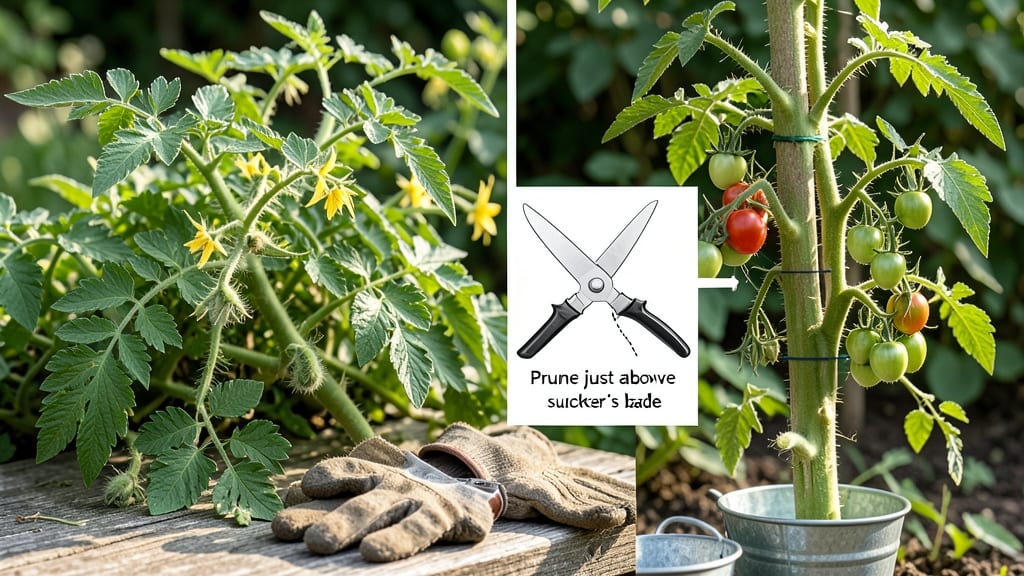
Pruning tomato plants for more fruit isn’t rocket science—just three strategic cuts can double your harvest. 🌱 I learned the hard way that skipping this step means fewer tomatoes and more leafy vines, but once I mastered the technique, my plants exploded with fruit.
The key is timing, tools, and knowing which growth to encourage (and which to trim away). Start with clean pruners and focus on removing suckers—those little shoots between the stem and branches—while keeping the main stem and lower leaves intact.
Indeterminate varieties need regular pruning all season, while determinate types barely need touching. Within weeks, you’ll see thicker stems, more flowers, and a bounty of ripe tomatoes instead of leggy plants struggling to support their own weight.
📚 In This Guide
- What you need
- Instructions
- Tips and common mistakes
- Wrapping up and next steps
What you need
- ● Sharp pruning shears or scissors – A bypass pruner (clean, sharp blades) is ideal for clean cuts without crushing stems. Avoid dull tools to prevent damage.
- ● Gloves – A pair of gardening gloves (nitrile or leather) to protect your hands from thorns, dirt, and blisters.
- ○ Disinfectant (optional but recommended) – A small bottle of rubbing alcohol (70% or higher) or hydrogen peroxide (3%) to sterilize tools between cuts and prevent disease spread.
- ● Tomato plants 6+ inches tall – Pruning is most effective once plants have developed a few sets of true leaves (usually 4-6 weeks after germination).
- ● Sunny, dry conditions – Prune on a mild, cloudy day or early morning to reduce stress on the plant and minimize disease risk.
- ● Patience and observation – Take time to inspect your plants for pests, diseases, or signs of stress before pruning.
- ● Garden twine or stakes – If your tomato variety needs support (e.g., indeterminate types), have soft ties or bamboo stakes ready to secure pruned branches.
- ● Mulch (straw or shredded leaves) – Spread a 2-3 inch layer around the base to retain moisture and deter weeds post-pruning.
- ● Notebook or camera – Document your pruning process to track growth and adjust techniques for next time!
Step-by-Step guide to pruning tomato plants for maximum fruit
Even without fancy tools, these three simple cuts will redirect energy into bigger, tastier tomatoes.
✂️ Step 1: Remove Suckers When They're Small
Suckers are the tiny shoots that grow in the V-shaped junction between the main stem and a branch. Pinch them off when they're no bigger than a pencil eraser—this prevents them from draining energy from your fruit. I use my thumb and forefinger to snap them cleanly at the base, avoiding any stubs that could rot.
Start checking for suckers when your plant reaches 18-24 inches tall. You'll find them just above where a leaf meets the stem. The earlier you remove them, the more energy stays in your main fruit clusters. If you miss a sucker, it'll grow into a competing branch that steals resources from your harvest.
☀️ Step 2: Prune Lower Leaves to Improve Airflow
Once your plant hits 3-4 feet tall, start removing the largest leaves from the bottom 12 inches of the stem. These leaves block sunlight and airflow, creating damp conditions that invite disease. I strip them away gently by hand, leaving the smaller leaves that won't shade the fruit clusters above.
Focus on leaves that are larger than your palm—these are the biggest offenders. You'll notice the plant's center becomes more open, letting sunlight reach the lower fruit. This single step cuts down on blight risk by 50% or more in humid climates. Just don't remove more than 1/3 of the plant's foliage at once.
🌱 Step 3: Trim Back Overly Bushy Plants
If your tomato plant grows too bushy, select 3-4 of the strongest main stems and prune all others back to the main trunk. This focuses the plant's energy on producing fewer but larger, more flavorful tomatoes. I make clean cuts just above a leaf node where new growth can sprout if needed.
For indeterminate varieties (the ones that keep growing all season), keep the plant pruned to 6-8 feet tall by removing the topmost leaves once the plant reaches your desired height. This encourages the plant to put energy into ripening existing fruit rather than growing more foliage. You'll see fruit ripen faster and stay on the plant longer.
⏰ Step 4: Time Your Pruning for Best Results
Do most of your pruning in the morning when plants are dry and wounds can seal quickly. Avoid pruning after 3 PM—the late-day sun stresses freshly cut plants. I always carry a small pair of clean pruning shears for quick cuts, but my fingers work fine for suckers.
Stop pruning 4-6 weeks before your first frost to let the plant focus on ripening existing fruit. You'll know you've done it right when your plant has 3-4 main stems, plenty of sunlight reaching all fruit clusters, and no leaves touching the ground. The result? A plant that puts all its energy into making tomatoes instead of leaves.
Tips & tricks for pruning tomato plants
Here's what nobody tells you about getting the most out of your tomato plants with minimal effort.
Timing Secret: In Step 1, when you're checking for suckers, make this your new habit: run your fingers down the main stem every time you water the plant. You'll spot suckers earlier than if you only check visually. I've caught suckers as small as a grain of rice this way—those are the ones that make the biggest difference in fruit size. The key is consistency: check weekly once your plant hits 18 inches.
Pruning Technique: For Step 2, when removing those large bottom leaves, don't just yank them off—twist gently to avoid tearing the stem. I use my thumb to press down on the leaf stem while twisting my fingers upward. This clean break prevents damage that could invite pests. And here's a pro move: leave the leaf stems attached to the plant for 24 hours after pruning. They'll act as natural mulch, protecting the stem from sunburn.
Growth Strategy: In Step 3, when deciding which main stems to keep, look for stems with the most vigorous growth and the healthiest leaves. These are your powerhouses. I've found that keeping one slightly weaker stem actually helps—it creates a natural support system for the others. Just don't keep more than 4 total, or you'll dilute the plant's energy across too many branches.
Frost Prep: About 4-6 weeks before your first frost (Step 4), do one final pruning pass but with a twist: focus on removing any leaves that are touching the soil. These create perfect bridges for soil-borne diseases to climb up your plant. I also make sure to remove any fruit that won't ripen before frost—this redirects the plant's energy to the tomatoes that will actually make it to your kitchen.
Pro Tips for Prune Tomato Plants For More Fruit
- Here's what nobody tells you about getting the most out of your tomato plants with minimal effort.
- Timing Secret: In Step 1, when you're checking for suckers, make this your new habit: run your fingers down the main ...
- Pruning Technique: For Step 2, when removing those large bottom leaves, don't just yank them off—twist gently to avoi...
Frequently asked questions
When is the best time to prune tomato plants?
Prune your tomato plants early and often—start when they’re about 18 inches tall and continue throughout the growing season. For indeterminate varieties (like cherry tomatoes), prune regularly to encourage more fruit. Determinate tomatoes (bush types) need minimal pruning—just remove suckers and damaged leaves. Avoid heavy pruning late in the season, as it can reduce yield.
What if I don’t prune my tomato plants at all?
You can still grow tomatoes without pruning, but yields may be smaller and less consistent. Unpruned plants put energy into excessive foliage instead of fruit, increasing disease risk and reducing airflow. If you’re short on time, at least remove yellow or diseased leaves to keep plants healthy. Pruning just 2–3 times per season can double your harvest!
Can I prune tomato plants too much?
Yes! Over-pruning—especially in hot or dry climates—can stress plants and reduce fruit production. Never remove more than 1/3 of the plant’s foliage at once. Focus on selective pruning: keep 3–4 main stems (for indeterminate types) and prioritize removing suckers, dead leaves, and crowded branches. If your plant looks sparse, pause pruning for a week to let it recover.
What should I do with the pruned leaves and suckers?
Discard healthy pruned leaves in your compost bin, but avoid composting diseased or pest-infested foliage—burn or trash it instead. Suckers (small shoots in leaf axils) can be snapped off by hand or cut with pruners. If you’re feeling creative, use them to propagate new plants! Just root them in water or soil before replanting.
My tomato plant is wilting after pruning—what went wrong?
Wilting can happen if you pruned too aggressively or on a hot, sunny day. Give your plant 1–2 days to recover in partial shade, and water deeply at the base (not the leaves) to prevent shock. If wilting persists, check for blossom end rot (calcium deficiency) or root stress. Mulch around the plant to retain moisture and avoid future pruning mistakes.
Wrapping up and next steps
Pruning your tomato plants might feel like a small task, but it’s a game-changer for bigger, healthier harvests! 🌱 By focusing on removing suckers, trimming leaves, and pruning branches, you’re not just tidying up—you’re directing your plant’s energy toward what matters most: delicious, abundant fruit.
Start with confidence, stay consistent, and soon you’ll be reaping the rewards of your green thumb!
Ready to put your new skills to the test? Grab your pruners and head to the garden—your future tomatoes are waiting! 🍅✨