
Pruning
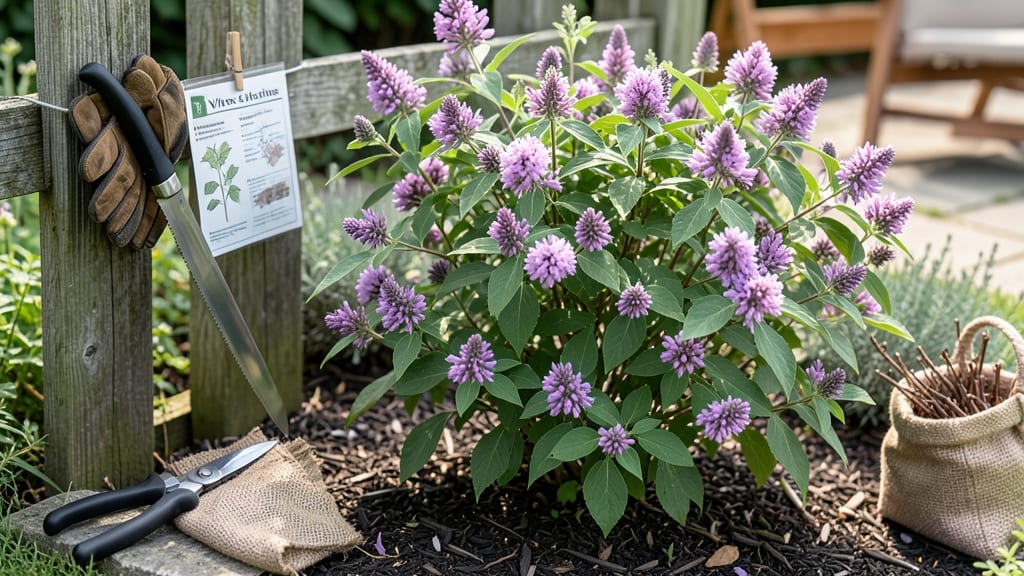
Pruning vitex isn't just about keeping it tidy—it's the secret to fragrant, bushy growth that smells like a summer meadow. ✨ I learned the hard way that skipping this step means leggy stems and fewer blooms, but once I mastered the timing and cuts, my vitex became the most fragrant shrub in the neighborhood.
The key is working with the plant's natural rhythm, not against it.
You'll need just a few tools: sharp pruners for clean cuts, loppers for thicker branches, and gloves to protect your hands from the tiny hairs.
The best time to prune is late winter or early spring, right before new growth starts—this gives the plant a head start on the season. If you want to encourage more blooms, you can also do a light trim in early summer after the first flush of flowers.
Start by removing any dead, diseased, or crossing branches—these are the first to go. Then shape the plant by cutting back one-third of the oldest stems to encourage new growth from the base.
For a full rejuvenation, you can even cut it back to 12-18 inches in early spring, and it'll bounce back stronger than ever. The goal is to keep it open and airy so light and air can reach all parts of the plant.
Here’s the thing—vitex is forgiving, but don’t over-prune in the fall. That’s when the plant stores energy for next year’s growth, and cutting too much too late can leave it struggling.
With the right timing and technique, your vitex will reward you with lush foliage and that signature lavender-like fragrance all season long.
📚 In This Guide
- What you need
- Instructions
- Tips and common mistakes
- Wrapping up and next steps
What you need
- ● Pruning shears: Bypass pruners (for small branches, ¼"–½" thick) or anvil pruners (budget-friendly, but can crush stems). Spec: Sharp, stainless steel blades to avoid tearing.
- ● Loppers: For medium branches (½"–1½" thick). Spec: Look for bypass-style loppers with a 12–18" handle for leverage.
- ● Pruning saw: For thick branches (>1½" thick). Spec: Curved blade for clean cuts; avoid cheap saws that dull quickly.
- ● Gloves: Heavy-duty gardening gloves (leather or reinforced) to protect from thorns and rough bark.
- ● Disinfectant: 70% isopropyl alcohol or rubbing alcohol to sterilize tools between cuts (prevents disease spread).
- ● Rags or paper towels: For wiping tools clean and dry.
- ● Trash bags or compost bin: To collect pruned branches (check local rules—some areas ban burning yard waste!).
- ● Ladder or step stool: If your Vitex is tall (6+ feet). Spec: Lightweight, stable, and rated for your height.
- ● Hand pruners: For tiny twigs or detailed shaping (great for Vitex negundo’s delicate stems).
- ● Pole pruner: Extendable tool for high branches (saves ladder time!).
- ● Sharpener: A file or honing stone to keep blades razor-sharp mid-session.
- ● Pruning sealant: Tree wound dressing (like Tanglefoot Tree Wound Pruning Seal) for large cuts (controversial—some gardeners skip it!).
- ● Notebook & pen: To jot down notes on growth patterns or pruning dates.
- ● Safety glasses: If working near dusty or thorny branches.
Step-by-Step guide to pruning vitex for year-round beauty
Here's how I keep my vitex bushes thriving—with simple cuts that boost fragrance and shape.
✂️ Step 1: Late Winter Cleanup (Before New Growth)
Start in late February or early March when the plant is still dormant but the weather warms up. I grab my pruning shears and look for dead, crossing, or weak stems first—these are the easiest to spot against the bare branches. Cut these back to the base completely, as they won't regrow properly.
Next, shape the plant by removing about one-third of the oldest wood from the center. This encourages new growth from the base and prevents the bush from becoming too woody. You'll see the stems are lighter in color and may have small buds forming—these are your signals that spring growth is about to begin.
✂️ Step 2: Summer Light Pruning (After Flowering)
Once the flowers fade in late summer (August), it's time for a lighter touch. I wait until the blooms have mostly dropped, but before the seeds form, because vitex sets seed easily and can become overcrowded. Trim back any leggy branches by one-third of their length to encourage bushier growth.
Focus on the outer edges of the plant to maintain its natural shape. You'll notice new growth starting at the tips of the branches—this is your cue that the plant is responding well. Avoid cutting into old wood at this stage, as it won't regrow as vigorously.
✂️ Step 3: Mid-Season Deadheading (For Continuous Blooms)
Throughout the growing season, I make quick passes to remove spent flowers. Grab your hand pruners and snip off the faded blooms just above a set of leaves or a bud. This encourages the plant to produce more flowers instead of focusing on seed production.
I do this every 2-3 weeks during peak bloom (June through August). You'll see fresh buds forming within a week or two—this tells me the plant is happy and ready to keep flowering. Deadheading also keeps the plant looking tidy and prevents it from becoming too heavy with seed heads.
✂️ Step 4: Fall Renewal (Prepare for Winter)
In October, after the first frost, give your vitex one last trim. Remove any remaining dead or diseased branches, and thin out the center again to improve airflow. This helps prevent fungal issues over winter. Cut back any overly long branches by about one-quarter to keep the plant compact.
You'll notice the leaves turning brown and falling off—this is normal. The goal here is to shape the plant for next year's growth, not to encourage new foliage. A light layer of mulch (if you have it) around the base will protect the roots from freezing temperatures.
✂️ Step 5: Minimal Winter Touch-Up (If Needed)
If your climate gets below 10°F, you might see some dieback in winter. Wait until early spring (when new buds appear) before pruning any damaged stems. Use your pruning shears to cut back to healthy wood, which you'll recognize by its green color and firm texture.
This is also the time to check for any branches that grew too close together during the season. Thin them out now to keep the plant open and airy. You'll see fresh green shoots emerging within a few weeks—this is your sign that the plant is ready for another growing season.
Tips & tricks for perfect vitex pruning
These simple tricks will help you keep your vitex looking lush and fragrant all year long—without the guesswork.
Timing is Everything: In Step 1, when you're removing one-third of the oldest wood in late February or early March, look for stems that are completely brown and brittle—they're dead and won't regrow. Healthy wood will still have some green underneath the bark. This precise timing (just before new growth) is what makes the difference between a bush that thrives and one that struggles.
Deadheading for More Blooms: During Step 3's mid-season deadheading, I like to do a quick visual check before cutting: if the faded flower has seed pods forming, it's definitely time to snip. But if you see fresh buds forming nearby, wait a few days—those buds might turn into new blooms. This 2-3 week schedule keeps flowers coming all summer, not just in bursts.
Winter Protection Hack: For Step 5's winter touch-up, if your climate dips below 10°F, I recommend wrapping the base of the plant with burlap after pruning. This extra layer of protection helps prevent frost cracks in the stems. Just remove it in early spring once new buds appear—you'll see them peeking through the brown stems.
Tool Maintenance: After each pruning session, especially during Step 2 and Step 4 when you're making more cuts, wipe your pruning shears with rubbing alcohol. The sap from vitex can gum up blades quickly. Sharp tools make cleaner cuts that heal faster, which is especially important for encouraging bushier growth in summer.
Pro Tips for Prune Vitex
- These simple tricks will help you keep your vitex looking lush and fragrant all year long—without the guesswork.
- Timing is Everything: In Step 1, when you're removing one-third of the oldest wood in late February or early March, look for stems that are completely brown and brittle—they're dead and won't regrow.
- Deadheading for More Blooms: During Step 3's mid-season deadheading, I like to do a quick visual check before cutting: if the faded flower has seed pods forming, it's definitely time to snip.
Frequently asked questions
Got questions about pruning your Vitex? You’re not alone! Here are answers to the most common concerns—from timing to tools and everything in between.
When is the best time to prune Vitex?
Prune Vitex in late winter or early spring (just before new growth starts) for the best results. Light trimming can also happen in summer to shape the plant, but avoid heavy cuts then. Never prune in fall—it can stimulate tender new growth that won’t survive winter.
Can I prune Vitex in winter?
Yes, but only in mild climates (USDA Zones 7-9). In colder areas, wait until after the last frost to avoid damaging dormant buds. If you must prune in winter, do so lightly and avoid cutting into old wood—it won’t regrow.
How much can I cut back Vitex in one pruning?
You can reduce up to 1/3 of the plant’s height in a single session, but avoid drastic cuts. Over-pruning stresses Vitex and may reduce flowering. For rejuvenation pruning (reviving an overgrown plant), spread cuts over 2-3 years to minimize shock.
What if my Vitex isn’t blooming after pruning?
Lack of blooms often means pruning too late (after buds form) or cutting into old wood. To encourage flowers:
- Prune before March in your zone.
- Avoid shearing—use selective cuts to open the center.
- Fertilize with low-nitrogen, high-phosphorus in spring.
Can I propagate Vitex from pruned cuttings?
Vitex roots easily from softwood cuttings (4-6 inches long) taken in late spring or early summer. Dip in rooting hormone, plant in moist perlite/sand, and keep humid (use a plastic bag). Roots form in 4-8 weeks. Hardwood cuttings (winter) also work but take longer.
What if my Vitex dies after pruning?
Don’t panic! Vitex is tough, but over-pruning or disease/insect damage can kill it. Check for:
- Brown, mushy stems = fungal infection (remove affected parts, avoid watering overhead).
- Yellow leaves = overwatering or poor drainage (amend soil with sand/compost).
- No new growth = pruned too late or into old wood (wait until spring for regrowth).
Wrapping up and next steps
Pruning your vitex doesn’t have to be intimidating—just follow the seasonal rhythm, and you’ll reward yourself with vibrant, fragrant blooms year after year! 🌿 By mastering the art of light shaping in spring, post-bloom cleanup in summer, and winter’s strategic cuts, you’ll keep your plant healthy, compact, and full of life. Grab those shears and get pruning!
Ready to take your vitex to the next level? Plan your next steps:
- 📅 Mark your calendar for seasonal pruning dates.
- 🌱 Experiment with shapes—try a rounded, bushy look or a more formal hedge!
- 📸 Snap progress photos to track your plant’s transformation.