
Pruning
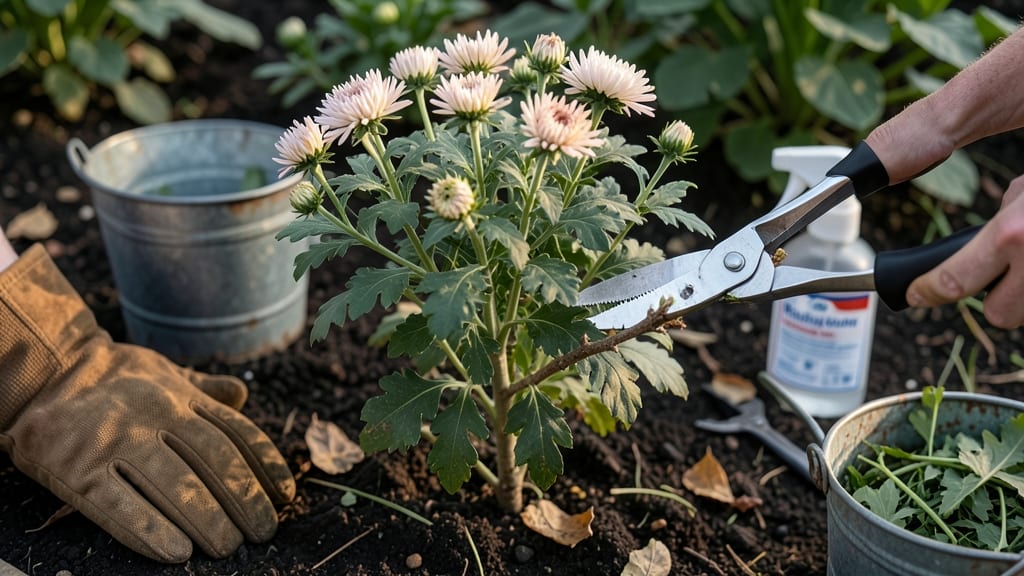
Pruning chrysanthemums at the wrong time means losing those bold fall blooms before they even appear. ✂️ I used to cut them back too early, and my plants would just sit there, stubborn and bare—until I learned the exact timing that triggers that second flush of vibrant color.
The key isn't just when you prune; it's how you shape the plant to encourage strong stems and fuller blooms.
You'll need sharp pruners, a clean workspace, and a sunny spot to observe your plants' growth patterns. Start by removing any dead or yellowing leaves first—they're just stealing energy from new growth.
Then comes the real work: cutting back stems by about one-third at the right time, which I'll show you how to spot in the next section. The goal is to wake up dormant buds while keeping the plant's energy focused on blooms, not foliage.
After pruning, your chrysanthemums will respond with new growth within 10-14 days, and those fresh stems will eventually produce the lush, colorful blooms you've been waiting for. The plants will look fuller, stand taller, and resist flopping in wind or rain.
Just don't skip the post-pruning care—watering deeply and feeding with balanced fertilizer keeps them on track for that showstopping fall display.
This method works for both garden beds and container-grown chrysanthemums, though container plants might need slightly more frequent watering after pruning. Whether you're dealing with standard mums or those compact varieties, the same principles apply. Let's get those shears ready and turn those plants into fall stars!
📚 In This Guide
- What you need
- Instructions
- Tips and common mistakes
- Wrapping up and next steps
What you need
- ● Sharp pruning shears or secateurs: A bypass-style pair (not anvil) to make clean cuts without crushing stems. Size: 5–7 inches for medium-sized plants.
- ● Disinfectant (70% isopropyl alcohol or bleach solution): Wipe tools before and after use to prevent disease spread.
- ○ Gloves (optional but recommended): Heavy-duty gardening gloves to protect hands from thorns and sap.
- ● Pruning saw (if needed): For thicker stems over ½ inch in diameter.
- ● Garden twine or rubber bands: To secure stems temporarily if you’re pinching back multiple branches.
- ● Compost bin or trash bag: For disposing of pruned foliage (avoid composting diseased plants).
- ● Hand lens or magnifying glass: To inspect stems for pests or disease before cutting.
- ● Pruning sealant (e.g., tree wound dressing): For large cuts (though chrysanthemums heal quickly, this can help prevent rot).
- ● Markers or flags: To label plants if you’re pruning a large variety garden.
- ● Watering can or hose: To hydrate plants post-pruning (especially in dry climates).
Step-by-step instructions for pruning chrysanthemum plants
Here's the precise method I use to coax those vibrant fall blooms—timing and angles matter more than you'd think.
⏰ Step 1: Time Your First Pruning for Mid-Summer Growth
Cut back your chrysanthemums 6-8 weeks before your first fall frost, typically around early to mid-July in most climates. This gives plants enough time to recover and produce strong new growth before flowering. Look for stems that have grown 6-8 inches tall—this is your signal to start shaping.
Use clean, sharp pruners to make cuts just above a set of healthy leaves or a leaf node. Avoid cutting into old, woody stems—you want fresh growth to emerge from the top. I like to remove about one-third of the plant's height in this first pruning. This might sound drastic, but it encourages bushier growth and more blooms later.
✂️ Step 2: Shape the Plant with 45-Degree Angles
Make your cuts at a 45-degree angle, about ¼ inch above a leaf node. This angle helps water run off the cut and prevents rot. Never leave stubs—always cut cleanly. For thicker stems, I make a small diagonal cut just above the node, then remove any remaining growth below it with a second cut parallel to the first.
Step back and assess the plant's shape after each cut. Aim for an open, rounded form that allows air to circulate. Chrysanthemums grow best when they're not too crowded—this prevents fungal diseases and encourages more blooms. If you see leggy stems reaching for light, trim them back by half their length to promote bushier growth.
🌿 Step 3: Pinch Back New Growth for Bushier Blooms
About 4-6 weeks after your first pruning, new growth will emerge. Once these new shoots reach 4-6 inches tall, pinch off the top ½ inch of growth with your fingers or pruners. This encourages the plant to branch out, creating a fuller, more compact form with more flower stems.
Pinching isn't just about looks—it's about flower production. Each time you remove the top growth, you're telling the plant to put energy into developing side shoots, which will eventually become your blooms. I pinch back all the main stems, including any that have grown too tall or lanky. Watch for new side shoots forming within 7-10 days—that's your reward for the effort.
☀️ Step 4: Provide Optimal Light and Water After Pruning
After pruning, move your chrysanthemums to a spot with full sun (6-8 hours daily). They need plenty of light to recover and produce strong new growth. If your plants were previously in shade, transition them gradually to avoid sunburn. Water deeply right after pruning to help the plant recover, then keep the soil evenly moist but not soggy.
Fertilize lightly with a balanced, water-soluble fertilizer (10-10-10) after pruning to support new growth. I use about half the recommended dose to avoid burning the plants. Avoid heavy feeding right before flowering—it encourages leafy growth over blooms. Instead, focus on consistent watering and good air circulation to keep your plants healthy.
⏰ Step 5: Final Pruning for Flowering Stems
About 3-4 weeks before your first fall frost, give your chrysanthemums one last trim. Remove any dead, damaged, or crossing stems to improve airflow and direct energy to the strongest blooms. Look for stems that have 3-5 sets of leaves—these are ideal candidates for flowering.
Leave the remaining stems uncut unless they're too tall or leggy. The goal now is to encourage blooms, not more foliage. You'll see flower buds forming in 2-3 weeks. At this stage, reduce watering slightly to help the plant focus on flowering rather than leaf growth. Deadhead spent blooms regularly to keep the plant producing new flowers until frost.
Tips & tricks for perfect chrysanthemum pruning
Mastering these simple techniques will transform your chrysanthemums into a blooming powerhouse—trust me, the difference is night and day.
Timing is Everything: The 6-8 week window before frost is non-negotiable for that first pruning. I learned this the hard way after pruning too late one year and getting barely any blooms. Use your local frost date as your guide—most garden centers provide this info. If you're unsure, err on the earlier side. The goal is to give your plants enough time to recover and produce strong new growth before fall sets in.
Precision Cutting Technique: That 45-degree angle isn't just about looks—it's about plant health. The slanted cut prevents water from pooling at the cut site, which reduces rot risk dramatically. For thicker stems, the two-step cutting method I use creates cleaner wounds that heal faster. Pro tip: Wipe your pruners with rubbing alcohol between cuts to prevent spreading disease from old growth to new.
Pinching Pays Off: The ½-inch pinch might seem small, but it's what triggers that magical branching. I always pinch all main stems—even the ones that look healthy—because you can't predict which ones will become your best bloomers. Watch for those new side shoots appearing within 7-10 days as your reward for the effort. This is where most gardeners miss out on maximum blooms.
Light and Water Balance: After pruning, those 6-8 hours of full sun become even more critical for recovery. I've seen plants struggle when moved from shade to full sun too quickly—transition gradually over 3-4 days. And that "evenly moist but not soggy" rule? It's the sweet spot for root development. Too much water after pruning can actually stress the plant more than not enough.
Pro Tips for Pruning Chrysanthemum Plants
- Mastering these simple techniques will transform your chrysanthemums into a blooming powerhouse—trust me, the difference is night and day.
- Timing is Everything: The 6-8 week window before frost is non-negotiable for that first pruning.
- Precision Cutting Technique: That 45-degree angle isn't just about looks—it's about plant health.
Frequently asked questions
Got questions about pruning chrysanthemums?
You’re not alone! Here are answers to the most common concerns—so you can confidently shape your plants for stunning fall blooms.
When is the best time to prune chrysanthemums?
Prune twice: First in early spring (after the last frost) to remove dead stems and encourage new growth. Then, late summer (6–8 weeks before your first frost) to promote blooming. Avoid pruning in fall—it can stunt flower development!
How much should I cut back my chrysanthemums?
For spring pruning, cut back one-third of the plant’s height. In late summer, trim halfway down to encourage bushier growth and more blooms. Always use clean, sharp shears to avoid damaging stems.
What if I prune at the wrong time?
Pruning too early (before spring) can leave plants vulnerable to frost. Pruning too late (after buds form) may reduce blooms. If you miss the window, focus on deadheading spent flowers instead to redirect energy to new growth.
Can I prune chrysanthemums for indoor pots?
Yes! Container-grown chrysanthemums need the same pruning rules, but adjust for size. Pinch back new growth tips in spring to encourage branching. In late summer, trim 1–2 inches above a leaf node to keep them compact and blooming.
What if my chrysanthemums don’t bloom after pruning?
Check these fixes:
- Light: Ensure 6+ hours of sunlight daily—chrysanthemums need it to bloom.
- Fertilizer: Use a balanced, low-nitrogen fertilizer (like 10-10-10) after pruning.
- Water: Keep soil consistently moist (not soggy) during the growing season.
Wrapping up and next steps
Mastering the art of pruning chrysanthemum plants is your ticket to vibrant, long-lasting fall blooms—no green thumb required! 🌸 By following the right timing, cutting angles, and tools, you’ll encourage healthier growth and stunning flowers.
Whether you’re a beginner or a seasoned gardener, every snip brings you closer to a showstopping garden.
Ready to put your new skills to work? Grab your shears, step outside, and give your chrysanthemums the care they deserve. Your future blooms will thank you! 🌿