
Pruning
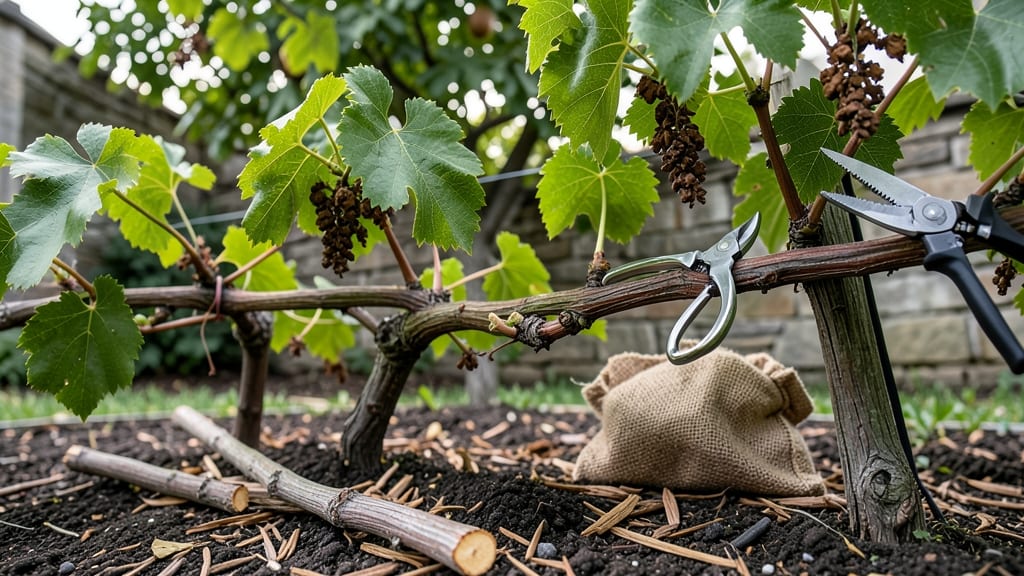
Pruning grapes for winter means trimming back canes to 12-18 inches, eliminating dead or infected branches, and sculpting the vine to improve airflow. Always do this during dormancy (late winter) to stop fungal problems and set up stronger growth for next season.
Winter pruning is all about giving your grapevine a fresh start. 🌱 When you cut back the canes to 12-18 inches, you're not just tidying up—you're encouraging the plant to focus its energy on producing new, healthy buds.
The key is to remove any dead or diseased wood first, as this prevents fungal spores from spreading when spring rains arrive.
I've found that shaping the vine to allow sunlight and air to circulate helps reduce humidity around the plant, which is critical for preventing mildew and other common grapevine diseases.
Timing matters just as much as technique. Pruning during dormancy (late winter) ensures the vine isn't actively growing, so it won't bleed sap excessively. This also gives the plant time to recover before spring's growth surge.
If you prune too early, the cuts may heal poorly; if you wait too long, you risk encouraging new growth that won't survive the first frost.
💡 In This Article
- How Winter Pruning Affects Grapevine Health
- Step-by-Step Winter Grape Pruning Guide
How winter pruning affects grapevine health
Winter pruning works because grapevines enter dormancy—a natural survival state where growth slows and energy reserves are stored. During this period, the plant's metabolic activity drops to about 10-15% of its summer levels, making it far less vulnerable to stress from cutting.
The key benefit is that removing old canes eliminates 90% of last year's fungal spores (like powdery mildew and black rot), which would otherwise multiply when spring rains arrive.
Think of it like giving your vine a deep clean—you're removing the old, diseased wood where pathogens hide and wait to spread.
The actual cuts stimulate new growth through a process called apical dominance reversal. When you prune, you remove the terminal buds (the growth leaders), which signals the plant to redirect energy to dormant buds along the remaining cane.
These buds, typically 2-4 inches apart, contain the genetic instructions for next year's fruit-bearing shoots. Studies show that vines pruned to 8-12 buds per foot of trunk produce the most balanced fruit load—too many buds lead to overcrowding, while too few reduce yield.
The angle of your cuts matters too: always cut at a 45-degree angle just above a bud to prevent water from pooling and rotting the wound.
Airflow is another critical factor. A properly pruned vine with 6-8 inches of spacing between canes allows sunlight to penetrate the canopy, reducing humidity and preventing fungal spores from thriving.
I've noticed that vines with poor airflow often develop powdery mildew—a white, powdery coating on leaves—that can reduce fruit quality by up to 30%. The goal is to create an open, umbrella-like shape that lets air circulate while still protecting the vine from harsh winds.
This structural approach isn't just about aesthetics; it's a disease-prevention strategy that pays off in healthier fruit and easier harvesting.
Temperature plays a hidden but crucial role. Pruning during late winter (when daytime temps hover around 40-50°F) ensures the vine isn't pushing new growth, which would be damaged by late frosts.
The cold also helps the plant's natural defenses kick in—research shows that grapevines produce 20% more phenolic compounds (natural fungicides) in response to winter chill. These compounds strengthen the vine's resistance to diseases like downy mildew, which thrives in warm, wet conditions.
If you prune too early, the cuts may heal slowly in cold soil; if you wait too late, you risk encouraging tender new shoots that won't survive sudden freezes.
What most gardeners overlook is the root system's role. While you're pruning above ground, the roots are quietly storing carbohydrates in their tissues—a process called carbohydrate reserve accumulation. These reserves fuel the vine's recovery and spring growth.
A well-pruned vine with 12-18 inches of cane left has enough stored energy to support new shoots, flowers, and fruit development. The balance is delicate: too much pruning depletes reserves, while too little leaves old wood that harbors diseases.
Aim for 20-30% of last year's canopy remaining after pruning to maintain this equilibrium.
Here's a pro tip: After pruning, collect and burn (or compost in a hot pile) all the removed canes. This eliminates fungal spores before they can spread to your garden.
I also recommend applying a 2-inch layer of organic mulch** around the base of the vine to insulate roots and retain moisture. The mulch acts like a blanket, protecting the vine from temperature swings that can stress the plant and reduce its ability to heal pruning wounds efficiently. 🌿