
Pruning
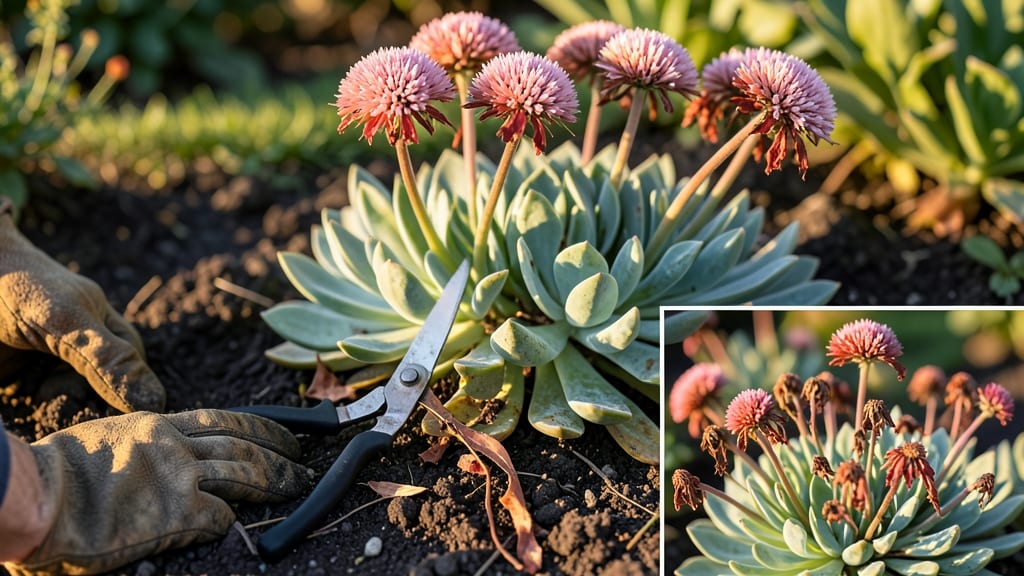
To prune Autumn Joy sedum, time it for late winter or early spring—right before fresh shoots emerge—to shield it from late frosts while jumpstarting vibrant spring foliage and preserving its signature fall hues. Never trim after leaves turn or during winter dormancy.
This timing works because Autumn Joy sedum enters dormancy in late fall, making it vulnerable to frost damage when new growth starts. Late winter pruning removes dead foliage while protecting tender stems from lingering cold snaps. 🌱 The key is cutting back by 20-30% to encourage bushier regrowth without stressing the plant.
I’ve found that pruning too early (in winter) risks exposing the plant to harsh conditions, while waiting too long (spring) can reduce its fall color intensity.
For best results, use clean, sharp shears to make cuts just above a leaf node. This encourages dense branching and maintains the plant’s compact shape. Deadheading spent blooms in early summer won’t affect fall color but keeps the plant tidy. Always wear gloves—sedum sap can irritate skin!
💡 In This Article
- Why Late Winter Pruning Preserves Autumn Joy Sedum’s Frost Hardiness
- Step-by-Step Guide to Pruning Autumn Joy Sedum for Optimal Spring Growth
Why late winter pruning preserves Autumn Joy sedum’s frost hardiness
Autumn Joy sedum (Sedum 'Autumn Joy') thrives on a precise pruning rhythm tied to its natural dormancy cycle. During winter, this hardy perennial enters a state of rest, where its metabolic processes slow dramatically to conserve energy.
The plant’s stems become woody and its leaves dry out, creating a natural insulation layer against freezing temperatures. However, this dormant state makes it vulnerable—new growth emerging too early in spring can be killed by late frosts, which often dip below 28°F in many climates.
Late winter pruning—typically between February and early March—removes the dead foliage just as the plant begins to wake up. This timing ensures the plant has shed its winter insulation but hasn’t yet sent out tender new shoots.
By cutting back by 20-30% of the plant’s height, you eliminate the risk of frost damage to emerging growth while allowing sunlight to reach the base, where new shoots will emerge.
The plant’s ability to regenerate quickly from its basal rosette means it can bounce back within weeks, producing lush, vibrant foliage by early summer.
What most gardeners overlook is how pruning timing affects fall color intensity. Autumn Joy’s signature deep red foliage develops as sugars concentrate in the leaves during cooler weather.
If you prune too late in spring or summer, the plant may produce fewer leaves or weaker stems, reducing its ability to store and display those vibrant pigments. Conversely, pruning too early—during winter dormancy—can expose the plant’s core to harsh winds and frost, stressing it unnecessarily.
The sweet spot is when the plant is just starting to push new growth, typically when daytime temperatures consistently reach 50°F.
This pruning strategy also plays a role in the plant’s overall health. Sedum stores energy in its thick, succulent leaves and stems, which act like tiny water reservoirs.
By removing dead material, you reduce the plant’s energy expenditure on maintaining non-functional tissue, redirecting that energy toward root development and new growth. The result? A stronger plant that’s better equipped to handle heatwaves, drought, and even pests.
I’ve seen Autumn Joy sedum in my own garden recover from 50% pruning within 6-8 weeks, producing denser foliage and more abundant blooms by summer.
For those in colder climates (USDA zones 3-5), the stakes are even higher. Late winter pruning can mean the difference between a plant that survives winter and one that succumbs to dieback.
The key is to prune when the ground is thawed but before the first signs of new growth appear—usually when you see the plant’s center starting to swell slightly. This ensures the plant isn’t stressed by cold while still having time to harden off before summer’s heat arrives.
One common mistake is confusing "late winter" with "early spring." While these terms are often used interchangeably, they can mean different things depending on your climate. In warmer regions (zones 7-9), late winter might mean January-February, while in colder zones, it could stretch into March.
Always check your local frost dates and adjust accordingly. The goal is to prune 2-4 weeks before the average last frost date in your area, giving the plant time to recover before temperatures drop again.
Finally, the role of pruning in preserving fall color can’t be overstated. The plant’s ability to produce its iconic hues depends on healthy, well-nourished stems. By pruning at the right time, you ensure the plant has enough energy to produce the dense foliage needed for that stunning color display.
Skipping this step can lead to sparse, weak growth that fades to a dull brown instead of the rich red we all love. 🌿