
Pruning
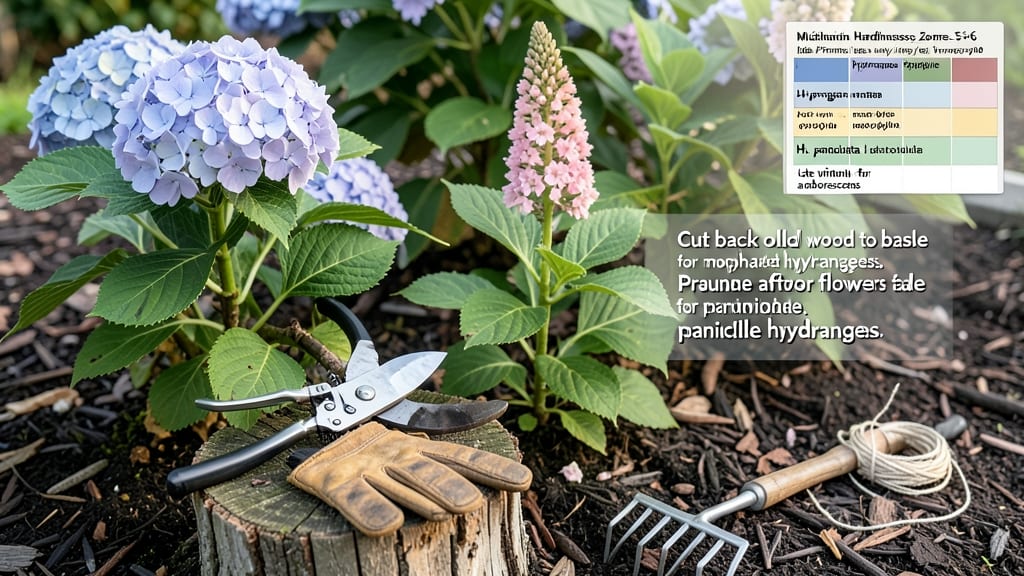
Pruning hydrangeas in Michigan at the right time—late winter—is the game-changer for summer blooms that steal the show.
Michigan’s unpredictable winters can leave gardeners confused about the best time to prune hydrangeas—get it wrong, and you risk stunted blooms or even killing your plant. But timing your prune just right in late winter unlocks the secret to lush, vibrant summer flowers.
The key is understanding your hydrangea type—whether it’s a mophead, panicle, or oakleaf—and matching it to Michigan’s 5b-6b climate zones. Prune too early, and frost damage can set your plant back. Too late, and you might miss the ideal window for stronger growth and bigger blooms.
In this guide, I’ll walk you through the exact late-winter window (February to March), how to prune for each type, and what to do after to keep your hydrangeas thriving all season. Let’s get those 🌸 blooms ready for their close-up!
Michigan’s ideal late-winter pruning window for hydrangeas
Michigan’s USDA Zones 5-7 create a unique challenge for hydrangea pruning—too early, and frost can damage tender new growth; too late, and you miss the optimal late-winter dormant season window. The key is understanding how climate zones and hydrangea types interact to determine the perfect February-March timing for your plants.
Most gardeners assume spring pruning is the only option, but Michigan’s late-winter window (mid-February to early March) offers the best balance between avoiding frost damage and stimulating healthy spring growth.
This timing works because hydrangeas are dormant during these months, making them less vulnerable to pruning stress while still allowing you to shape the plant before new growth begins.
Why late winter? Pruning at this time removes dead or damaged wood from winter, improves air circulation, and encourages stronger spring regrowth. For Michigan gardeners, this approach also helps prevent fungal diseases that thrive in the damp spring conditions we often see after winter thaw.
The exact timing varies slightly by hydrangea type and your specific Michigan microclimate. Southern Michigan (Zone 6) can prune 1-2 weeks earlier than northern areas (Zone 5), where hard frosts linger longer.
Always wait until after the last hard frost in your area—typically mid-March for most of the state—but before bud break (usually late March to early April).
Hydrangea macropHYLLA (mophead) and Hydrangea quercifolia (oakleaf) should be pruned in late February to early March to remove old wood that bloomed the previous year. Meanwhile, Hydrangea paniculata (panicle) varieties bloom on new wood, so they can wait until early April—just before new growth starts.
| Hydrangea Type | Pruning Time (Michigan) | What to Prune | Key Notes |
|---|---|---|---|
| Mophead (Bigleaf) | Late February–Early March | Old wood (last year’s blooms) | Blooms on old wood; prune before buds swell. |
| Panicle | Early April (after last frost) | Old wood (light pruning) or new wood (heavy pruning) | Blooms on new wood; can prune later for bigger blooms. |
| Oakleaf | Late February–Early March | Old wood (last year’s stems) | Blooms on old wood; prune early for fall color. |
| Smooth | Early Spring (March–April) | Old wood (light pruning) | Blooms on old wood; prune after last frost. |
To pinpoint the exact pruning window for your Michigan location, check your last average frost date (typically mid-April for most of the state) and prune 4-6 weeks before that date. For example, if your last frost is April 15, aim to prune by March 1-15 for most hydrangea types.
Use a Michigan frost map (available from MSU Extension) to refine your timing based on your specific county.
One common mistake Michigan gardeners make is pruning too late in spring, which can stunt flower production or even kill new growth if a late frost hits. Always prioritize dormant-season pruning (late winter) over spring pruning unless you’re dealing with a panicle hydrangea, which can handle slightly later cuts.
For mophead and oakleaf varieties, late winter is the only safe time to prune without risking lost blooms.
Pro tip: Mark your calendar for February 20–March 10 as your target window, but adjust 1-2 weeks later if your area experiences unusually cold winters. You can also cover young plants with burlap if an unexpected frost is forecasted after pruning.
This simple step can save your hydrangea from frost damage while still allowing it to benefit from your late-winter pruning efforts.
Remember, the goal of late-winter pruning is to encourage vigorous new growth while maintaining the plant’s natural shape. By pruning at the right time, you’ll set your hydrangeas up for bigger, healthier blooms all summer long—without the stress of last-minute spring adjustments.
With Michigan’s variable climate, this precise timing is the secret to hydrangea success in our Great Lakes state.
Step-by-step late-winter pruning guide for Michigan gardeners
Michigan’s late-winter is the perfect window for pruning hydrangeas—just after the worst frost but before new growth begins. This timing ensures you shape your plant without risking frost damage to fresh cuts.
For Michigan’s USDA Zones 5b-6b, aim for late February to early March, when daytime temps hover around 40°F.
Not all hydrangeas need pruning the same way. Bigleaf and oakleaf types bloom on old wood, so prune lightly to shape and remove dead branches. Meanwhile, panicle and smooth hydrangeas bloom on new wood, making them ideal for hard pruning in late winter.
Knowing your hydrangea type is the first step to pruning success.
-
Step 1: Gather Your Tools
Clean, sharp bypass pruners for small branches; loppers for thicker stems; gloves to protect from thorns; and disinfectant (rubbing alcohol) to sterilize tools. -
Step 2: Identify Dead or Damaged Wood
Look for brown, mushy branches or those with no green buds. These should be cut back to healthy wood at a 45-degree angle just above a bud or leaf node. -
Step 3: Prune Old-Wood Hydrangeas (Bigleaf/Oakleaf)
Remove only dead/diseased branches. For shaping, cut back no more than 1/3 of the plant. Focus on opening the center for better airflow and sunlight penetration. -
Step 4: Hard Prune New-Wood Hydrangeas (Panicle/Smooth)
Cut back 1/2 to 2/3 of the plant to 1-2 feet tall from the ground. This encourages vigorous new growth and bigger blooms later in the season. -
Step 5: Clean Up and Disinfect
Remove all pruned debris from the area to prevent disease. Wipe tools with rubbing alcohol to kill bacteria before storing. -
Step 6: Apply Mulch and Fertilizer
Spread 2-3 inches of mulch around the base (but not touching the stem) to retain moisture. Add a balanced fertilizer (10-10-10) in early spring once new growth appears.
When pruning, always cut at a 45-degree angle just above a bud or outward-facing leaf. This encourages healthier growth and prevents water pooling on the cut. Avoid leaving stubs, as they can attract pests or rot.
For large branches, use loppers and make the cut just outside the branch collar to promote rapid healing.
Michigan’s late-winter weather can be unpredictable, so have a backup plan if a sudden frost hits. If you must delay pruning, wait until early April—just don’t wait past mid-April, when new buds begin to swell.
Over-pruning is another common mistake; never remove more than 1/3 of the plant in one season, or you risk weakening its structure.
After pruning, monitor your hydrangeas for signs of stress, like yellowing leaves or wilting. These could signal over-pruning or disease. If you see new green buds by late April, you’ve pruned at the perfect time!
With proper late-winter care, your hydrangeas will reward you with vibrant blooms all summer long. 🌸