
Pruning
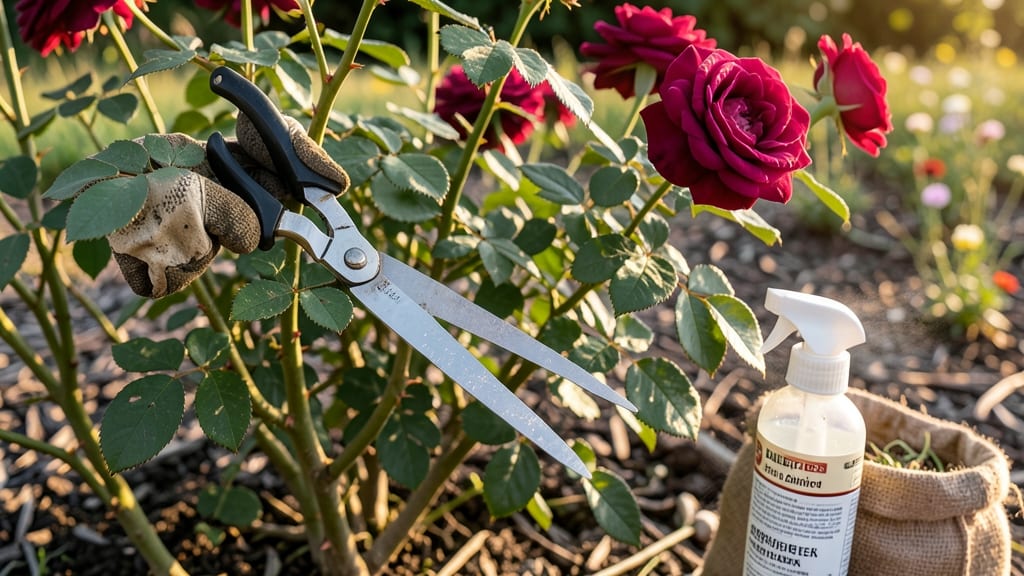
Pruning Double Knock Out roses transforms them from scraggly bushes to neat, blooming powerhouses—and the secret lies in timing and technique. ✂️ I’ve pruned these roses for years, and the difference between a bush that looks like a tangle and one that bursts with flowers comes down to three key cuts: when to prune, where to cut, and how to shape.
These roses bloom on new wood, so aggressive pruning isn’t just safe—it’s essential for that famous Knock Out vigor.
The best time to prune is late winter or early spring, right before new growth starts. Grab your loppers and clean pruners, then cut back one-third of the oldest canes to the ground—yes, even the thick ones.
For shaping, aim for an open center; this lets air and light reach the heart of the bush, preventing disease. I always make cuts at a 45-degree angle, about ¼ inch above an outward-facing bud to encourage bushier growth.
What you’ll end up with is a rose bush that looks neat, full, and ready to explode with blooms by summer. The first flush of flowers arrives faster, and each stem produces more buds than before.
The key is consistency—prune lightly in summer after blooms fade to keep the shape tidy, and do a quick cleanup in fall to remove dead wood. No more hiding these roses in the back of the border; they’ll be the star of your garden.
This method works for any Double Knock Out variety, whether you’ve got the original red or the newer colors like pink or yellow. The only rule? Don’t skip the late-winter prune—it’s the foundation for everything else.
Once you see how much healthier and fuller your roses become, you’ll wonder how you ever pruned them any other way.
📚 In This Guide
- What you need
- Instructions
- Tips and common mistakes
- Wrapping up and next steps
What you need
- ● Pruning shears or bypass pruners – Choose sharp, high-quality ones (e.g., Felco or Fiskars) with a 4- to 6-inch blade for clean cuts.
- ● Loppers – For thicker stems (1-inch to 2-inch diameter); look for bypass-style to avoid crushing.
- ○ Hand pruners (optional but handy) – For smaller stems and detailed trimming.
- ● Disinfectant (70% isopropyl alcohol or bleach solution) – Clean tools between cuts to prevent disease spread.
- ● Garden gloves – Thick, cut-resistant (e.g., 14-inch leather or nitrile-coated) to protect from thorns.
- ● Rake or broom – For clearing debris post-prune.
- ● Trash bags or compost bin – To dispose of pruned material (avoid composting if diseased).
- ● Pruning saw – For very thick stems (over 2 inches) that loppers can’t handle.
- ● Rubbing alcohol wipes – Quick tool disinfection on the go.
- ● Marking twine or flags – To tag stems for future reference (e.g., "keep" vs. "remove").
- ● Knee pads or stool – For comfort during long pruning sessions.
- ● Rose fertilizer (balanced, 10-10-10 or rose-specific) – Apply 4-6 weeks after pruning to boost regrowth.
Step-by-Step instructions for pruning Double Knock Out roses
Here's the method I've used for years to keep my Knock Out roses blooming nonstop—no dead wood, no guesswork.
✂️ Step 1: Prune in Late Winter for New Growth
Wait until after the last frost when daytime temperatures hit 50°F consistently. This is when your roses wake up from dormancy. Grab your clean, sharp pruners and remove any dead, diseased, or crossing branches first—these are your priority. I always start at the base and work upward to see the full structure.
Look for canes that are thinner than a pencil—these are old, unproductive stems. Cut them back to the ground. For thicker canes, make your cuts just above an outward-facing bud, angled slightly downward to shed water. This ensures new growth starts in the right direction and prevents rot.
✂️ Step 2: Shape the Bush and Encourage Blooms
Step back and visualize your rose as a vase shape—wider at the base, narrowing toward the top. Remove any suckers growing from the base (these steal energy from your blooms). For the remaining canes, cut back about one-third of their length, but never more than halfway. This keeps the plant strong while promoting bushier growth.
Here's the thing—Knock Out roses bloom on new wood, so you're not just shaping, you're stimulating future flowers. After pruning, you should see 3-5 strong canes remaining. If you're unsure, leave a few extra—you can always prune more later. Just don't remove more than ⅓ of the plant at once.
✂️ Step 3: Light Pruning After Each Blooming Cycle
Throughout the growing season, give your roses a light trim every 6-8 weeks. After a flush of blooms fades, cut back spent stems by about half their length. This isn't about perfection—it's about keeping air circulating and encouraging more flowers. I always prune on a dry morning to reduce disease risk.
Watch for weak, leggy growth—this means your rose needs more sun or water. Trim these stems back to a stronger branch. Avoid cutting into old wood (the dark, woody parts)—you'll just get fewer blooms. The goal is to keep the plant balanced and encourage continuous flowering.
✂️ Step 4: Clean Up in Fall for Winter Prep
When temperatures drop below 50°F at night and new growth slows, it's time for your final prune of the year. Remove any dead or diseased canes, then cut back the remaining stems by about one-third. This gives your rose a clean start in spring and reduces overwintering pests.
Don't worry about shaping perfectly now—the focus is on removing anything that could harbor disease. After pruning, give your roses a 2-inch layer of mulch around the base (but not touching the stems) to protect roots from freezing. This is the easiest way to ensure next year's blooms start strong.
⏰ Step 5: Maintain Year-Round with Minimal Effort
Once your roses are pruned, the real work is done. Water deeply once a week (more in extreme heat) and fertilize with a balanced rose food every 6 weeks during the growing season. Knock Out roses are tough, but they'll reward you with nonstop blooms if you keep them healthy.
I know it seems like a lot of steps, but trust me—once you get the rhythm, it takes less than 30 minutes per season. The key is consistency. Prune at the right times, keep the plant fed, and you'll have roses that bloom from spring until frost.
Tips & tricks for pruning Double Knock Out roses
These simple yet powerful tricks will help you transform your rose pruning from a chore into a routine that guarantees lush, blooming bushes all season long.
Timing is Everything: Pay close attention to that 50°F temperature threshold—it's the magic number that tells you when your roses are truly waking up from dormancy. I've learned the hard way that pruning too early can shock the plant, while waiting too long means missing the window for optimal new growth. Check your local frost dates and mark your calendar for when daytime temps consistently hit 50°F. This is when your roses are ready for their first big prune of the year.
The Right Cut Makes All the Difference: When you're making those one-third cuts in Step 2, always look for outward-facing buds. These buds will grow away from the center of the plant, creating that beautiful vase shape we want. I like to use my thumb and forefinger to gently feel for the bud—it should be just below where I make my cut. The slight downward angle you create helps water run off, preventing those nasty fungal issues that can ruin your roses.
Seasonal Maintenance Secret: During those 6-8 week light pruning sessions in Step 3, don't just focus on the dead blooms. Take a moment to examine the overall health of each stem. If you notice any cankers (those dark, sunken areas) or signs of black spot disease, cut those stems back to healthy wood immediately. This is your best defense against spreading problems. I keep a small bottle of rubbing alcohol with me to wipe down my pruners between cuts—it's a simple habit that prevents cross-contamination.
Mulch Like a Pro: That 2-inch layer of mulch in Step 4 isn't just for show—it's a game-changer for winter protection. I use shredded hardwood mulch because it breaks down slowly, adding organic matter to the soil as it decomposes. The key is to keep it 2 inches thick but 2 inches away from the stem. Too close to the stem can cause rot, while too thick can smother the plant. This simple step has saved my roses from winter dieback more times than I can count.
Pro Tips for Prune Double Knock Out Roses
- These simple yet powerful tricks will help you transform your rose pruning from a chore into a routine that guarantee...
- Timing is Everything: Pay close attention to that 50°F temperature threshold—it's the magic number that tells you whe...
- The Right Cut Makes All the Difference: When you're making those one-third cuts in Step 2, always look for outward-fa...
Frequently asked questions
Got questions about pruning Double Knock Out® roses? You’re not alone! Here are answers to the most common concerns to help you prune like a pro.
When is the best time to prune Double Knock Out roses?
Prune Double Knock Out® roses twice a year: late winter/early spring (before new growth starts) and mid-summer (after blooming). Avoid pruning in fall—it can stimulate tender new growth that won’t survive winter. For heavy pruning, focus on the first cut in late winter to shape the bush for the season ahead.
How much can I prune my Double Knock Out roses?
You can be bold with these hardy roses! In late winter, cut back 1/3 to 1/2 of the plant’s height to encourage dense, bushy growth. For mid-summer pruning, trim just enough to remove spent blooms and shape the plant. Avoid over-pruning—these roses bounce back, but too much at once can stress them.
What should I avoid when pruning Double Knock Out roses?
Avoid these common mistakes:
- Pruning in fall—it can lead to frost damage.
- Cutting into old wood (gray/brown stems)—always prune to outward-facing buds.
- Leaving stubs—cut just above a bud or node for cleaner growth.
- Ignoring dead or diseased branches—remove them immediately to prevent spread.
Can I prune Double Knock Out roses in containers?
Yes! Container-grown Double Knock Out® roses follow the same pruning rules but may need more frequent shaping due to limited space. Prune lightly after each flush of blooms to keep the plant compact. Ensure the container has good drainage and use a high-quality potting mix to support vigorous growth.
What if my Double Knock Out roses aren’t blooming after pruning?
If your roses skip blooms, check these fixes:
- Light pruning—sometimes, less is more. Try pruning only dead or crossing branches.
- Fertilizer boost—use a balanced rose fertilizer in spring and mid-summer.
- Watering habits—ensure they get 1–2 inches of water per week (more in extreme heat).
- Sunlight—these roses thrive in full sun (6+ hours daily).
Wrapping up and next steps
Pruning your Double Knock Out roses doesn’t have to be intimidating—it’s all about timing, technique, and a little TLC! 🌿 With the right tools, seasonal cuts, and a focus on healthy growth, you’ll soon enjoy bushier blooms, stronger stems, and fewer pests.
Remember: patience and consistency are key, so don’t rush the process.
Ready to transform your rose bushes? Grab your pruners, dust off those gloves, and take the next step—whether it’s scheduling your first prune of the season or experimenting with deadheading for extra blooms. Your roses (and your garden!) will thank you. Happy pruning! ✂️🌸